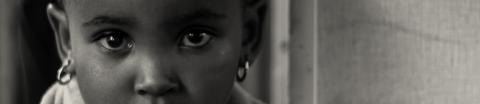
“Child abuse casts a shadow the length of a lifetime” – Herbert Ward
I recently attended a workshop on child abuse, which also covered the Children’s Act 38 of 2005, and the Amendment Act 41 of 2007. A representative from the Teddy Bear Clinic spoke about the incidence of child abuse in our country and what we can do to help and prevent the abuse in our society. She also spoke about possible signs of child abuse and where to go for help (refer to list at the end of article on who to call for help if you suspect abuse and useful contacts).
For children, childhood should be an ideal time where they don’t have a care in the world. However some children are forced to deal with situations that most of us could never imagine in our worst nightmares. These are the children in our society that are being abused. This will leave mental and physical scars, and can be tragic and traumatising for the child. The pain for the child does not end when he/she discloses the abuse. According to Wikipedia, South Africa has some of the highest incidences of child and baby rape in the world.
Child abuse can be defined as the physical, sexual or emotional ill treatment of a child. Child abuse can be divided into 4 different categories: physical abuse, psychological or emotional abuse, sexual abuse or neglect. For the purposes of this article, I am mainly discussing sexual abuse.
Until quite recently, children had few rights in terms of protection from abuse by their parents or other perpetrators (perpetrators may be known or unknown to the child). However, in South Africa our constitution guarantees children the rights to equality, dignity and freedom from all forms of violence – either public or private sources. Much still remains to be done to meet this constitutional obligation. However, it is important that people and children are informed about their rights in terms of the laws specifically related to child abuse.
There are many people in our society who work with children, such as educators, who may encounter children who have been sexually abused. They need to be adequately equipped and able to identify child abuse and know how to deal with it. In addition they need to understand the legal implications and know what is expected of them in this situation. They also need to know about the warning signs in order to identify if a child is possibly being abused, especially in cases where the abuse is not reported. It is important to be aware that a person can be a perpetrator of child sexual abuse regardless of gender, race, marital status, religion, employment, position of power, culture, or religion. Many perpetrators of child abuse are people who are closely associated with the child.
In terms of the process in South Africa, the abuse needs to be reported as soon as it’s been discovered, and dealt with through the criminal justice system, which sets out the rights of the child. The incident also needs to be reported to the police as soon as possible, and a specially trained officer should assist with the case – this implies the involvement of the Child Protection Unit. A medical examination would be carried out, which would be followed by a court proceeding. (For further details of all of the procedures necessary refer to the Teddy Bear Clinic’s guide for educators, caregivers, parents and social workers, called “Know Your Rights, Child Sexual Abuse”).
The Teddy Bear Clinic, in Johannesburg, works to help a child to testify against their perpetrator. This is done by looking at the child’s unmet emotional needs, as well as looking at how the child’s background and environment effects the child. Play therapy is used as a tool to attempt to find out what has happened to the child. They will work with the child using positive affirmation, thereby working on the child’s self esteem, as well as unresolved issues in their lives. Children need to be empowered to be aware. There are various educational programmes offered at the Teddy Bear Clinic for both children and adults. The family is involved in the therapeutic process – parents need to know that they have to be able to communicate and to have open dialogue with their child in order to reduce the incidence of abuse.
Possible signs of child sexual abuse: (remember that this should be used at a guide only and is not an absolute indicator of abuse)
- children may suddenly have more gifts and money than usual
- certain family members or other people want to take only that child out all the time
- the child may take longer than usual to get home from school
- the child may refuse to go to school or to visit people they used to before
- the child may make strange comments about a certain person
- the personality of the child may suddenly change or she/he becomes more clingy
- there may be a lack of appetite or sudden increased appetite
- the child may suddenly want to be isolated, and may seem to be withdrawn
- child may start bedwetting, having nightmares or can’t sleep at night when they did before
- child may have more sexual knowledge than is appropriate for his/her age
- the child may be depressed or even attempt suicide
- a child may have medical problems such as: chronic itching, pain in the genitals, venereal diseases.
Message to give children regarding sexual abuse:
- when someone touches you in a way that makes you feel bad or uncomfortable, it is unsafe and you must tell an adult you trust
- it is not your fault when inappropriate sexual touching or sexual abuse happens
- do not feel guilty
- stay calm
- you must tell an adult you trust to prevent this from happening again
- tell an adult you trust if you know abuse is being experienced by any of your friends
Who to call for help
- Childline-0800 055 555 (24 hours)
- South African Police Services: 10111, (24 hours)
- Teddy Bear Clinic, (office hours only): 011 484 4554
References:
-Teddy Bear Clinic Booklet, and pamphlet, “Know your rights, Child Sexual Abuse, a guide for educators, caregivers, parents and social workers”
–http://en.wikipedia.org/wiki/Child_sexual_abuse
Comments are closed